The following is taken from the main body of Episode 3 of my NUCLEAR PASTOR: Critical Mass podcast…

In this podcast we’ll explore the issue of the death penalty, also known as capital punishment, and we’ll begin by taking a look at the Biblical genesis of the death penalty, as well as the reason it’s commanded by God as a requirement for human government. From there we’ll look at it from the perspective of both the Noble Kosmos and the Evil Kosmos so that we who follow God may know where to stand on the issue today and in the days to come, and why it’s important to the survival of the image of God upon Earth.
SUBJECT
First, let’s start off with some general thoughts on human government from a Biblical perspective, and the first thing we need to do is to delve into the Scriptures in order to figure out what God would have us think concerning the issue of human government.
Now, if it seems strange to you that a pastor should devote so much of his time and effort into the issue of government (as I tend to do with this podcast), let me try to explain my position. Simply put, the affairs of Earth are clearly the affairs of humanity (Genesis 1:26). And since Christians fully qualify as human beings, this means that the affairs of Earth are our business as much as they’re anyone’s, and since few things affect the affairs of Earth more than the issue of human government, Christians are to be as involved in government as they can possibly be.
Furthermore, it’s inconceivable that something as important to the human condition as is the idea of government would be passed over in silence by God, especially when you consider that something as seemingly unimportant as the very hairs of our head are numbered by Him (Matthew 10:30). It is therefore logical and appropriate that we should look to the Scriptures for the principles needed for good human governance, for they are indeed to be found there.

Next, we need to admit that we’re truly living in precipitous times, for the world is perhaps a single generation or two from being fully enveloped by Hellish ideologies, and it’s my view that time is indeed short for us Earthlings to stay the hegemony/dominance of evil, because if we don’t, Earth will see its darkest times since before the Flood.
For on one front an Islamic caliphate seeks to dominate our planet from pole to pole, and wherever it finds itself in power it always resorts to the tyranny of Shariah law, while its secular counterpart is the growing totalitarian trend of Communism, whose slightly fairer sister Socialism is rapidly leading most of the West into ruin and consequent totalitarianism. In the end, that great bulwark of human freedom and dignity – Judeo-Christian thought – is soon to fail us, and with it all things noble will perish. We must therefore get off of our hind ends and raise the banner of truth once again upon the world and the issue of government, or our grandchildren will know only slavery at its hand (meaning government).
So let me now answer some of the objections that are bound to come our way as we prepare to subject our respective governments to Biblical principles. The first is as old and tired as it can be, and is known as the separation of church and state argument. There is simply no truth – no truth whatsoever – to the notion that the U.S. Constitution contains such a clause or even such an attitude – it is simply wishful thinking by the secularists, humanists and Marxists of our times (who usually are one and the same, by the way), and who want the issue of government to be devoid of Biblical principles so that they may remake it as they see fit.
Now, please don’t misunderstand me – I’ll be the first person in line to sign any petition separating church government from civil government (for they should and must be separate things), but we must not give in to the current darkened thinking that human government must be devoid of Biblical thought or precept, which is a different animal altogether. As we shall see in this study, the very idea of human government is owned by God, which means that proper human government can only exist in concert with His Divine nature. Government divorced from His nature is therefore the worst form of it, and is why Communism’s short stay upon Earth has destroyed more of human freedom and dignity than any other form of government during the same timeframe. It is the worst imaginable concept of human government.
The other argument most often levied against Believers by the secularists is that we can’t legislate morality. This is simply one of the dumbest things I’ve ever heard. So why do I say that? Well, because (hello McFly!) all legislation is morality, since all legislation essentially tells us that one thing is better than another, or that one thing is right while another thing is wrong, which by definition are moral judgments, and are therefore clear examples of legislating morality.

What the secularists (those who want any religion out of public/private life) actually want, though, is to be able to legislate their morality without any hindrance from Biblical morality. For instance, legislating abortion on demand is a moral issue, for it tells us that it is moral to end the life growing in a woman’s womb if that is her desire, and that it is immoral to deny a woman this desire. And so, the issue of government is not an issue of morality versus non-morality; it’s an issue of whose morality will triumph over another’s. So it has always been, and so it will always be. But because a Biblical morality always works to a people’s advantage and blessing, ours is simply the best morality there is, and we should have no qualms about influencing government with its principles.
Next, in order to lay a proper foundation for a Biblical understanding of the role of human government, we need to look into the appropriate nature of human government, which is that it’s designed to be stern (not compassionate, and I say again, not compassionate), and therefore to be feared by those governed. Now, this may seem like a contradiction of so much of what we believe from the Bible, since what is generally misunderstood by Believers is the role of compassion upon planet Earth. Acts of love, mercy and kindness are encouraged – and even expected – of individuals who love and follow God (Luke 10:29-37), as is forgiveness (Matthew 18:21-35). But the Biblical design for government is quite the opposite, for it is meant to hold the worst expressions of the sinful human nature in check.
And so, without further adieu, let’s go to the place in the Bible where human government was instituted by God upon planet Earth: Genesis 9:5,6, where God is speaking to Noah and his family immediately upon their exit from the Ark. And for your lifeblood I will require a reckoning: from every beast I will require it and from man. From his fellow man I will require a reckoning for the life of man. “Whoever sheds the blood of man, by man shall his blood be shed, for God made man in his own image.” (ESV)
The first thing this passage gives to us is an excellent definition of human government, which although I know it’s truly bad English, I like to call “human limitment,” for government is designed by God to limit the worst expressions of the sinful nature so that humanity would never again reach the depths of depravity it had done prior to the Flood, which resulted in God needing to hit the reset button on planet Earth.
For instance, when we take our children (or grandchildren) to the local fun center for the day and allow them to drive the go-carts to their heart’s content, we do so knowing that the go-carts are inhibited from high speeds by the use of a governor that limits the speed for safety’s sake. It is this idea of limitation that is the sole purpose of Biblical human government: to govern means to limit.

Now, although it’s not the point of this study to fully follow this process of revelation from God regarding human government/limitment (my book UNGOD is the place for that), God defined this process of limitation for us through a successive series of revelations concerning the institution of human government, and the very first of His revelations was as simple as it was short, and may be may be summarized in Genesis 9:6: “Whoever sheds the blood of man, by man shall his blood be shed, for God made man in his own image.”
And so, we have the beginning of human government in the Bible, and that beginning (or, more appropriately, that foundation) is laid with the idea of the requirement (and please understand, it’s not a suggestion, but a requirement) for the execution of convicted murderers. In fact, the execution of convicted murderers is the foundation of all appropriate government from God’s perspective. Meaning that God didn’t give humanity an option in this, and so any government that doesn’t execute its duly-convicted murderers is failing in its most basic duty.
Now, I can already hear the naysayers chiming in: But Barry, I thought we were supposed to be pro-life? How can we be pro-life (like you taught in your last podcast) while at the same time being pro-capital punishment for murderers? Isn’t that a contradiction? Well, not at all, and for a couple of good reasons.
First reason: We’re actually pro-image of God people. And being pro-image of God people means that we support life in the womb. Second reason: God is the designer and patent-holder on human life, which means that He and He alone has the right to dictate when human life may or may not be taken. And according to the principles of His Word, human life may legitimately be taken under the following conditions:
- #1: The execution of convicted murderers (Genesis 9:6; Numbers 35)
- #2: The execution of those guilty of heinous crimes against the image of God (Leviticus 20)
- #3: Justifiable war (Exodus 17:8-13)
- #4: Self-defense (Luke 22:38)
- #5: An allowance is made for the accidental killing of another human being, which is known as manslaughter to us – not murder (Numbers 35:11)
Now, as we move on, of great importance is that, regarding the execution of murderers, we see that the reason for doing so (according to Genesis 9:6b) is to protect the image of God in humanity: … for God made man in his own image. And, incidentally, protecting the image of God is the exact same reason that we support life in the womb; again, reinforcing the notion that we are to be pro-image of God people, rather than strictly pro-life people.
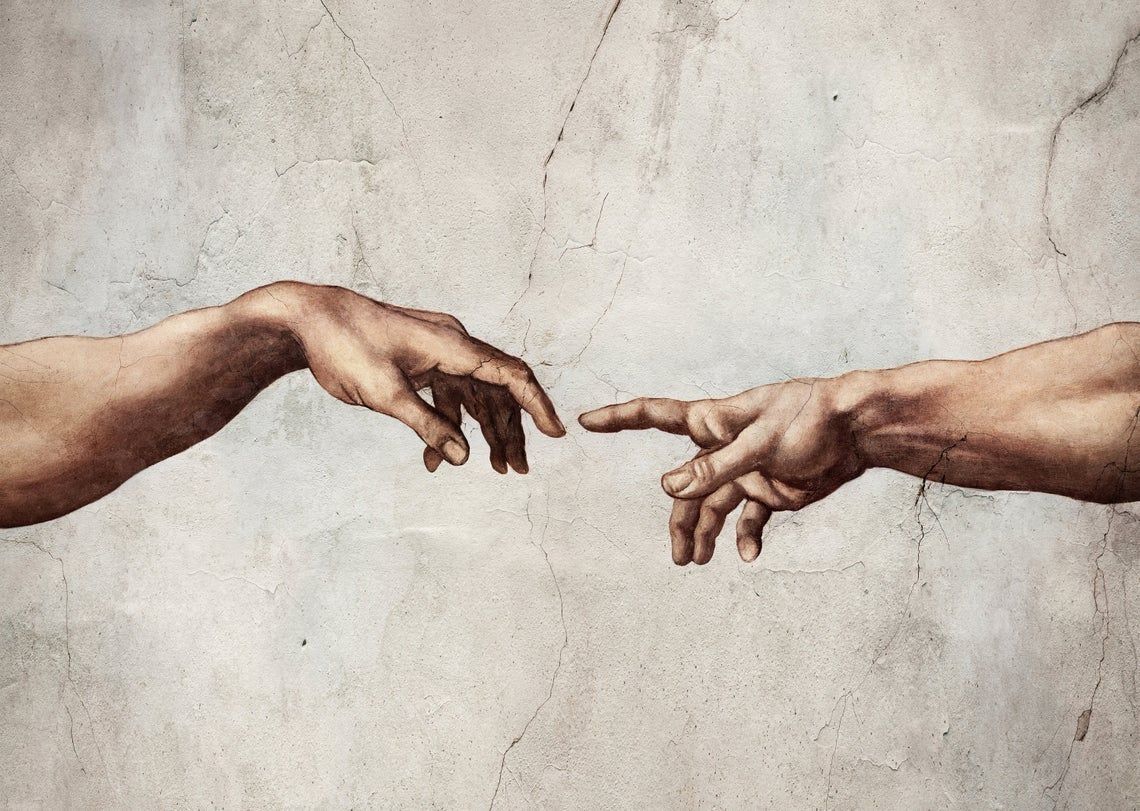
But Barry (you may ask), how in tarnation does executing murderers help protect the image of God? Well, glad you asked (hypothetically). It’s really not at all hard to understand, and the Bible itself helps us to understand why, but first let me give a basic definition of the image of God in order to help us understand what’s being protected.
Although the image of God is nowhere in the Bible strictly defined, I’ve found it extremely healthy (both from a teaching standpoint and a personal understanding standpoint) to describe the image of God with what I call the Philippians 4:8 things: Those things that are true, honorable, just, pure, lovely, commendable, excellent and praiseworthy – things without which life on Earth wouldn’t be worth living. It is these things that were lost prior to the Flood, when the sinful human nature was allowed to exist apart from any form of limitation, resulting in widespread murder and violence.
And now back to how the idea of the execution of convicted murderers helps protect the image of God. First, by God’s own words, Genesis 9:6 clearly tells us that doing so will protect the image of God, and it does so in two primary ways: #1 It ensures that the murderer can never murder again, while #2 It serves as a deterrent to others who are contemplating murder, since no one wants to lose their own life.
Now, of course, there are those who disagree with this because they hate the idea of capital punishment, but it doesn’t take a genius to watch and understand how quickly those indicted for murder work to get capital punishment taken off the table. Most everyone – even murderers – want to continue living. However, the Bible is quite clear that crime is always slowed when the punishment for it is swift and stern (Ecclesiastes 8:11), and also when the wicked are purged from a people’s midst (Deuteronomy 19:19,20).

Essentially, when human life is taken without God’s sanction, wickedness will abound if the murderer is not executed. It is simply the reality of life, despite what our modern thought would argue. Without this requirement, wickedness reigned supreme in less than seventeen hundred years of humanity’s creation, leading to the global purge of the great Flood. With this requirement in place, we’ve now lasted well over four thousand years without the need for such global judgment.
So, now that we’ve established that God instituted capital punishment for murderers as the basis for human government/limitment, let’s deal with some arguments against that idea, which usually take the form of one or both of the following arguments: #1, Hey Barry, the idea of capital punishment was Old Testament stuff, and the New Testament is about grace, and #2, Hey Barry, Jesus, being gracious, doesn’t support capital punishment for today.
Let’s first deal with argument #1, which is that capital punishment was Old Testament stuff, while the New Testament is about grace. First off, God doesn’t change – He’s the same yesterday, today and always. So, when He gives humanity instructions regarding how to treat a murderer, those instructions will likewise not change. Second, human nature hasn’t changed. We’re as fallen and sinful in New Testament times as we were in Old Testament times.
Third, while much of the New Testament exists to teach humanity of our Savior and Messiah, and to instruct the church on issues of worship and conduct, there’s plenty of Old Testament-style judgment there. Just spend some time in Revelation. Fourth, in Romans 13:4 we’re told concerning the Roman soldier (who was a soldier, a police officer and an executioner), that …he is God’s servant for your good. But if you do wrong, be afraid, for he does not bear the sword in vain. For he is the servant of God, an avenger who carries out God’s wrath on the wrongdoer. And finally, when Jesus said, “Before Abraham was, I am!,” in John 8:58, He was claiming to be the Yahweh of the Old Testament. Meaning that He’s the same One who gave the command concerning capital punishment for murderers in the first place.
Having now established that capital punishment for murderers is equally needed in New Testament times as it was in Old Testament times, and that God is the same during both Testaments, let’s now deal with the issue of our very gracious Jesus supposedly not supporting capital punishment. Now, the passage of Scripture usually used to support such an idea is the case of the woman caught in the middle of adultery (John 8), for which the punishment under the Law of Moses was that she be stoned to death (the Old Testament form of capital punishment).
However, such an apologetic misses the point, because Rome had long ago removed from Israel their right to perform capital punishment at this time. What was really happening was that Jesus’ enemies were trying to trap him between Roman law and Jewish law, and Jesus didn’t fall for their trick.

A much better passage for the topic at hand comes to us in how Jesus dealt with the repentant criminal hanging next to Him on one of the other two crosses, and is found in Luke 23:39-43, where the man readily admitted that he was getting the sentence that he deserved. But when he saw the manner and dignity of Jesus’ bearing upon the Cross, this man repented of his sins, was forgiven by the Savior and was promised Heaven that very day. But Jesus (although He certainly had the power to do so) did not free the man from execution for either his sincerity or his repentance. Instead, He (Jesus) required that the man pay the price for what he had done on Earth. The One who had instituted capital punishment stood behind its necessity, even though it required the death of (essentially) the first Believer, leading us to the inescapable (yet unsurprising) conclusion that Jesus, who is the Old Testament’s Lawgiver, is still in support of the death penalty for heinous crimes in the New Testament era.
So, now to the bottom line regarding capital punishment and its intersection with the Noble Kosmos and the Evil Kosmos. Regarding the Noble Kosmos, we see that capital punishment (the death penalty) for murderers is the very basis for any legitimate form of human government, and is a requirement from the Scriptures laid upon all governments.
Now, since the Evil Kosmos is simply the undoing and/or opposing of the Noble Kosmos, it’s pretty easy to figure out what the positions of the Evil Kosmos are regarding capital punishment. So, what would that look like?
- #1 The Evil Kosmos would say: Do not put convicted murderers to death
- Instead, under the dictates of the Evil Kosmos, governments should coddle murderers, study murderers, rehabilitate murderers and then release murderers back into the population
- #2 The Evil Kosmos would say: Give murderers life sentences or less-than-life sentences in prison (but no execution)
- #3 The Evil Kosmos would say: Government should become the engine of murder (something we covered in Episode 2)
- #4 The Evil Kosmos would say: Government should execute people for light and transient reasons/crimes, which is typically a position of totalitarians
- And this is an important idea, because the Bible is very clear (since capital punishment is so severe and final) that the bar set for the conviction of murder must be extremely high – it isn’t meant to be a light and transient thing
CONCLUSION
And so, let me wrap this up with a cautionary tale in order for us to understand why delving into such issues as this are important for every follower of Christ and for every true student of God’s Word – even though such issues are typically highly uncomfortable for us.
Years ago, during my days as a senior pastor, while teaching through the Bible I taught concerning the issue of the necessity of capital punishment when it came up in the Scriptures, with my message containing some of the material I’ve covered today. But there was someone in the congregation who disagreed with my position, and who told me so, after which I invited him to my home to discuss the issue. We went out on the patio, and I took about an hour to trace the Biblical roots of the need for capital punishment, culminating with the proof that Jesus was still in favor of it, despite how uncomfortable we are with the idea (and yes, although I agree with the need of it, it doesn’t mean I’m comfortable with it).
And after all that, I’ll never forgot what he said to me, which in essence was, “Wow, I’ve never heard such a solid case regarding the need for the death penalty, and I thank you for taking the time to do so. However, I still don’t want this taught in my church.” Well, to say I was stunned would be an understatement…

Now, the interesting thing about this individual is what he did for a living, for, you see, he was a private investigator who spent the majority of his investigating on behalf of murderers who were sentenced to death, seeking to find a way to get their death sentences overturned. Essentially, he found the death penalty to be wrong and morally repugnant, but during that same visit he had earlier showed me the firearm he legally carried (we were both firearm enthusiasts) via his CCW permit, which he was allowed because his investigations took him into some dicey situations, as you could imagine.
And so, after his response and considering what he said, I replied: So then, there’s something that I don’t understand about you. Now, I do understand that you oppose the death penalty for convicted murderers, but yet you carry that firearm and are prepared to use it if you’re in fear for your life or from great bodily injury, and if you fire that weapon, someone’s most likely gonna die. So how is it that you think it’s immoral for a government to put to death a murderer duly convicted by a jury of his/her peers, yet at the same time it’s morally permissible for you to put someone to death for something that hasn’t even happened yet, but that you think is unavoidable and imminent?
Well, of course, he had no answer, and sadly, soon afterward he stopped attending our church. So why do I bring up this painful episode? And why have I set my sights on tackling so many difficult issues with Critical Mass? Well, the answer is easy – it’s an issue of discipleship for followers of Jesus Christ. So, what do I mean by that?
Well, if I’ve been a follower of Christ for years and/or decades, yet don’t know what the Scriptures teach regarding abortion, then I’m either not paying attention to the Scriptures, or I don’t want to be taught by the Scriptures because what it teaches is uncomfortable to me. It’s not an issue of salvation, but it is an issue of discipleship.
If I’ve been a follower of Christ for years and/or decades, yet don’t know what the Scriptures teach regarding socialism or communism, then I’m either not paying attention to the Scriptures, or I don’t want to be taught by the Scriptures because what it teaches is uncomfortable to me. It’s not an issue of salvation, but it is an issue of discipleship.
If I’ve been a follower of Christ for years and/or decades, yet don’t know what the Scriptures teach regarding the issue of marriage, then I’m either not paying attention to the Scriptures, or I don’t want to be taught by the Scriptures because what it teaches is uncomfortable to me. It’s not an issue of salvation, but it is an issue of discipleship.
If I’ve been a follower of Christ for years and/or decades, yet don’t know what the Scriptures teach regarding human genders and sexuality, then I’m either not paying attention to the Scriptures, or I don’t want to be taught by the Scriptures because what it teaches is uncomfortable to me. It’s not an issue of salvation, but it is an issue of discipleship, etc., etc.

And such a lack of discipleship (and I define discipleship as letting the principles of Scripture dictate the boundaries of life, thought and action) destroys the witness of the Church, and furthermore hamstrings the ability of the Church to be salt and light upon this planet. And when that happens, our planet turns putrid at an alarmingly rapid pace, which is exactly what we see happening here in the USA, where Christians’ lack of discipleship is seeing us getting crushed in the battle between the Noble Kosmos and the Evil Kosmos.
So, what’s the solution? Well, it’s actually simple: We, as followers of Jesus Christ and as students of His perfect Word, come to that Word with an open and humble heart, bowing before that Word and asking it to teach us. We don’t do as my friend once did, which is to come to God’s perfect Word with a heart that says: I don’t care what the Bible says, I’m gonna believe what I’m gonna believe. I’ve got my salvation, but I don’t wanna go where I’m gonna be made uncomfortable, or which is gonna require me to change that which I hold near and dear.
Now, this latter position is a sad, sad place to be, but my deep hope and prayer is that many will be changed from such an attitude through the episodes of Critical Mass. Remember, Christian, the salvation of your soul was just the beginning. What needs to occur after that is discipleship, which is bowing to the Scriptures, and letting them dictate the boundaries of life, thought and action
PRAYER
Sir, we thank You for the amazing, wonderful and enlightening principles of Your Word, while at the same time recognizing that these principles go against the principles governing this fallen world of ours, making them uncomfortable for us in the extreme. So please help us to stand with Your principles come what may, and to have the strength to resist the easy belief system of the Evil Kosmos. Give us humble hearts that are bowed before Your perfect Word in all things – not just the things that we want to see and want to believe, but in all things so that Your Noble Kosmos might shine its beautiful light more fully upon this planet, and so that all things that are true, honorable, just, pure, lovely, commendable, excellent and praiseworthy – things without which life on Earth wouldn’t be worth living – might not only survive, but even thrive among us. And in thriving point the way to You and to the everlasting life that You offer through the finished work of Your Son upon Calvary’s Cross. Amen.
 CRITICAL MASS